One more post about last Saturday’s trip. Of course we saw trees up in Kokee, the forest with many native trees is one of the main attractions there. However, we ran across two interesting non-native trees.
In the early 1900’s wild cattle roamed the uplands and destroyed much of the native forest, causing erosion. The lack of forest and heavy erosion was threatening the water supply for the profitable sugar cane down below. In the 1930’s, one of the jobs of the CCC (Civilian Conservation Corps) camp established in Kokee was to replant the forest. They experimented with different trees that now grow around the meadow, mostly cedar, cypress, and redwood.
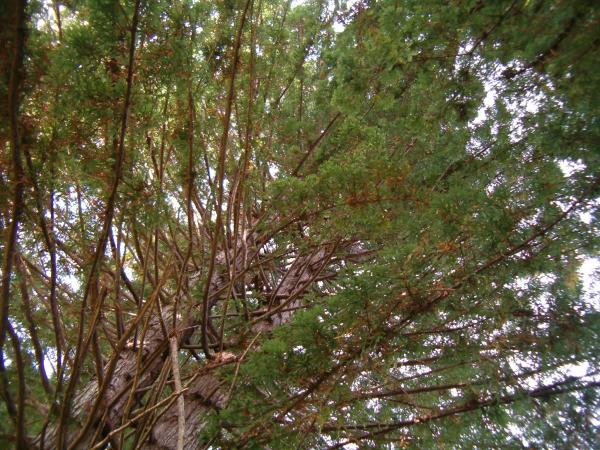
One of the redwood trees between the meadow and the road is perfect for climbing, so we climbed it, nearly 150 feet (50m) to the top. If you look closely, you can see me in this photo, just to the left of center:
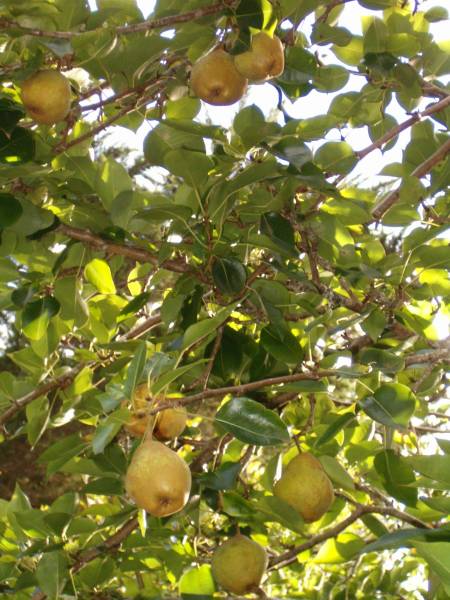
They also planted an orchard of mainland fruit around the old camp, taking advantage of the cool weather at 4000 feet (1300 m) altitude to grow apples, pear, and plums in the tropics. Some of the plums have spread to the nearby forest and they are so sought after that you need a permit to pick them in season. But we found one of the old pear trees, still producing small hard pears. I tried one small one and it was edible but crunchy and not very sweet. We picked a few good ones off the ground and one or two off the tree hoping they’ll ripen at home.